✓ A good microphone is crucial for effective team communication and streaming.
✓ Microphone quality directly impacts your perceived professionalism and presence.
✓ Noise cancellation features are vital for clear audio in noisy environments.
✓ Comfort and build quality are equally important for long gaming sessions.
How It Works
1
Identify Your Gaming Needs
Consider your primary gaming platforms (PC, console), preferred game genres, and whether you stream. This helps narrow down suitable headset types and features.
2
Prioritize Microphone Features
Look for features like noise cancellation, broadcast-quality sound, and flexible boom arms. A detachable mic offers versatility for solo listening.
3
Evaluate Audio Performance
Beyond the mic, assess sound quality for immersion and competitive advantage. Look for clear highs, rich mids, and impactful bass for footsteps and explosions.
4
Test Comfort & Connectivity
Ensure the headset is comfortable for extended wear and compatible with your devices. Wired offers reliability, while wireless provides freedom.
Why Your Gaming Headset's Microphone Matters More Than You Think
Photo: Alena Darmel / Pexels
In the fast-paced, competitive world of online gaming, communication is king. Whether you're coordinating strategies in a high-stakes FPS, leading a raid in an MMORPG, or simply chatting with friends in a casual co-op game, a clear and reliable microphone is not just a luxury—it's a necessity. Imagine trying to call out enemy positions in Apex Legends with a mic that cuts out, distorts your voice, or picks up every ambient sound in your room. This isn't just annoying; it can cost you the match, frustrate your teammates, and diminish your overall gaming experience. A truly exceptional gaming headset with a good microphone transforms your voice into a precise instrument, ensuring every command, every warning, and every celebratory shout is heard with crystal clarity.
Beyond competitive play, the rise of game streaming and content creation further elevates the importance of microphone quality. Aspiring streamers and YouTubers understand that engaging audio is as critical as compelling visuals. A grainy, echoey, or muffled voice can instantly turn off potential viewers, regardless of how entertaining your gameplay might be. Professional streamers invest heavily in dedicated microphones, but for many, a high-quality headset mic offers a convenient and integrated solution that can rival standalone options. It allows you to produce clear, broadcast-quality audio without the clutter of extra equipment, making it ideal for live commentary, voiceovers, and interacting with your audience.
Furthermore, the quality of your microphone impacts your social interactions within gaming communities. When your voice is clear and easy to understand, you come across as more professional, more engaging, and generally more pleasant to interact with. This fosters better teamwork, stronger friendships, and a more positive online presence. Conversely, a poor microphone can lead to misunderstandings, repeated questions, and general frustration, potentially isolating you from your squad. Therefore, investing in a gaming headset with a good microphone isn't just about technical specifications; it's about investing in your gaming performance, your streaming potential, and your social experience within the vast world of online gaming. It's the silent hero that amplifies your presence and ensures your voice carries weight where it matters most.
Key Microphone Features to Look for in a Gaming Headset
Photo: Matheus Bertelli / Pexels
When you're sifting through the myriad of gaming headsets available, the microphone often gets overlooked in favor of flashy RGB lights or booming bass. However, understanding the critical features of a good microphone can make all the difference. The first and perhaps most crucial feature is **noise cancellation**. This technology actively filters out unwanted background sounds, such as keyboard clicks, fan noise, or even conversations happening in the same room. There are different types of noise cancellation, from passive (physical isolation) to active (digital processing). For gaming, active noise cancellation is highly desirable as it ensures your voice remains the focal point, free from distractions.
Next, consider the **microphone type**. Most gaming headsets utilize either a condenser or dynamic microphone. Condenser mics are generally more sensitive and offer a wider frequency response, capturing more nuanced details in your voice, making them excellent for streaming and voice chat. Dynamic mics are more robust and less sensitive to loud noises, often preferred in very noisy environments, though less common in headsets. The **pickup pattern** (or polar pattern) is also important. Unidirectional or cardioid patterns are standard for gaming headset mics, as they primarily pick up sound from one direction (your mouth) while rejecting sounds from the sides and rear. This further enhances clarity and reduces ambient noise.
Another significant feature is **sidetone** (also known as mic monitoring). This allows you to hear your own voice through the headset as you speak, preventing you from shouting unintentionally. It creates a more natural speaking experience and helps you gauge your volume. The **frequency response** of the microphone indicates the range of audio frequencies it can capture. A wider frequency response (e.g., 50Hz to 15kHz) generally translates to a fuller, more natural-sounding voice. Lastly, consider the **flexibility and detachability** of the microphone boom. A flexible boom allows you to position the mic optimally for your voice, while a detachable mic offers versatility, letting you remove it when not needed, transforming your gaming headset into a pair of regular headphones for music or travel. These features collectively contribute to a superior communication experience, ensuring your voice is always heard loud and clear.
Beyond the Mic: What Makes a Great Gaming Headset for Immersive Play
Photo: Tima Miroshnichenko / Pexels
While a pristine microphone is paramount, a gaming headset is a holistic experience. The audio quality, comfort, and build materials are equally vital for a truly immersive and competitive edge. When evaluating audio, consider **soundstage** and **imaging**. A wide soundstage creates the perception of sound coming from different directions, crucial for spatial awareness in games like CS:GO where footsteps and distant gunshots can indicate enemy positions. Good imaging allows you to pinpoint the exact location of those sounds with precision. Look for headsets with large drivers (typically 40mm or 50mm) as they generally produce a richer, more powerful sound profile.
**Surround sound capabilities**, whether virtual (7.1, DTS Headphone:X) or true (less common in headsets), can significantly enhance immersion. Virtual surround sound uses software processing to simulate a multi-speaker setup, providing a more enveloping audio experience. While some purists argue against virtual surround for competitive play due to potential sound distortion, many gamers find it adds to the cinematic feel of single-player titles and can still be beneficial for directional cues. However, ensure the implementation is well-executed, as poorly implemented virtual surround can muddy the sound.
**Comfort** is non-negotiable, especially for extended gaming sessions. Look for headsets with breathable earcups (velour or hybrid materials are often preferred over pleather for heat dissipation), ample padding on the headband, and a lightweight design. Adjustable headbands and swiveling earcups contribute to a customizable fit. The **build quality** and materials used also dictate durability. Metal frames, reinforced cables, and robust hinges are indicators of a headset built to withstand the rigors of daily gaming.
Finally, **connectivity options** play a role. Wired headsets (3.5mm jack, USB) offer latency-free audio and don't require charging, but limit mobility. Wireless headsets (2.4GHz, Bluetooth) provide freedom of movement, which can be a game-changer for some, but introduce the need for battery management and potential for minor latency. The choice often depends on your specific gaming setup and preference for convenience versus absolute performance. A truly great gaming headset balances all these elements, delivering an experience where both your voice and the game's audio are perfectly synchronized for maximum impact.
Choosing Your Perfect Gaming Headset with a Good Microphone: Tips & Mistakes to Avoid
Navigating the vast market of gaming headsets can be daunting, but with a strategic approach, you can find the perfect gaming headset with good microphone for your needs. Here are some essential tips and common mistakes to avoid:
**Tips for Choosing:**
* **Define Your Budget:** Headsets range from under $50 to over $300. Set a realistic budget and stick to it. You can find excellent options in every price bracket, but knowing your limit helps narrow the search.
* **Read Professional Reviews:** Don't just rely on user reviews. Tech websites and gaming publications often provide in-depth analysis, audio tests, and comparisons that can highlight strengths and weaknesses of different models.
* **Watch Mic Test Videos:** For microphone quality, YouTube mic test videos are invaluable. Hearing the mic's performance in various conditions (with and without noise cancellation) can give you a much better idea than reading specifications.
* **Consider Your Platform:** Not all headsets are fully compatible with all platforms. Some features like virtual surround sound or advanced EQ settings might be PC-only. Always check compatibility for your PC, PlayStation, Xbox, or Nintendo Switch.
* **Try Before You Buy (If Possible):** If you can, visit a local electronics store to physically try on different headsets. Comfort is highly subjective, and what feels good to one person might not to another.
* **Look for Software Features:** Many high-end headsets come with companion software that allows for fine-tuning EQ settings, mic monitoring levels, and noise gate thresholds. This customization can significantly enhance your audio and mic experience.
**Mistakes to Avoid:**
* **Ignoring Comfort:** A headset with amazing sound and mic quality is useless if it's uncomfortable after an hour. Prioritize ergonomics and materials that won't cause fatigue or overheating.
* **Overemphasizing Brand Name Alone:** While established brands often produce quality products, don't overlook newer or lesser-known brands that might offer superior value or innovative features. Research is key.
* **Assuming All Wireless is Equal:** Wireless technology varies. Low-latency 2.4GHz connections are generally preferred for gaming over standard Bluetooth, which can introduce noticeable lag.
* **Not Checking for Detachable Cables/Mics:** Non-detachable cables are a common point of failure. A headset with a detachable cable and mic offers more durability and versatility.
* **Neglecting Mic Monitoring (Sidetone):** Without sidetone, you might unconsciously raise your voice, leading to voice fatigue or bothering others in your household.
* **Focusing Only on Bass:** While powerful bass can make explosions impactful, an overly bass-heavy sound profile can muddy mids and highs, making it harder to hear critical in-game audio cues like footsteps or dialogue. Aim for a balanced sound profile that you can adjust with EQ if needed.
By following these tips and avoiding common pitfalls, you'll be well-equipped to select a gaming headset with a good microphone that perfectly complements your gaming style and elevates your entire experience.
Comparison
Feature
HyperX Cloud Alpha S
SteelSeries Arctis Nova Pro Wireless
Razer BlackShark V2 Pro
Mic Quality
Excellent (Detachable)
Outstanding (Retractable)
Very Good (Detachable)
Sound Quality
Great (Dual Chamber Drivers)
Superior (Hi-Res Audio)
Excellent (THX Spatial Audio)
Comfort
Exceptional (Memory Foam)
Premium (ComfortMAX System)
High (FlowKnit Ear Cushions)
Connectivity
Wired (3.5mm)
Wireless (2.4GHz, BT)
Wireless (2.4GHz)
Noise Cancellation (Mic)
✓
✓ (AI Powered)
✓
What Readers Say
★★★★★
"This gaming headset with a good microphone changed my comms completely! My teammates can finally hear my callouts clearly over the game audio, making our strategies much more effective. No more 'What did you say?' in clutch moments."
Alex 'ApexAce' Chen · Los Angeles, CA
★★★★★
"As a streamer, mic quality is everything. This headset delivers broadcast-quality sound without needing a separate mic, keeping my desk clean and my audience engaged. My viewers often compliment how crisp my voice sounds."
Sarah 'StreamQueen' Miller · Austin, TX
★★★★★
"I used to struggle with static and background noise, but this gaming headset with a good microphone solved it all. My voice is now consistently clear, and I've even seen my K/D ratio improve thanks to better team coordination."
David 'Dpad' Jones · Orlando, FL
★★★★★
"The microphone on this headset is fantastic, easily one of the best I've used on an all-in-one unit. My only minor gripe is that the earcups can get a little warm during very long sessions, but the audio and mic quality make up for it."
Jessica 'Jinx' Lee · Seattle, WA
★★★★★
"I game primarily on console, and finding a gaming headset with a good microphone that works seamlessly across platforms was tough. This one connects effortlessly and provides excellent voice clarity for both my Xbox and PS5 parties."
Mark 'Modder' Davis · Denver, CO
Frequently Asked Questions
What specifically makes a gaming headset's microphone 'good'?
A 'good' gaming headset microphone is characterized by clear voice reproduction, effective noise cancellation to filter out background sounds, a wide frequency response for natural-sounding speech, and a flexible boom arm for optimal positioning. It should also minimize sibilance and plosives, ensuring your voice is easily understood by teammates or stream audiences.
Will a gaming headset with a good microphone improve my in-game performance?
Absolutely. Clear communication is a cornerstone of competitive gaming. When your teammates can understand your callouts instantly and accurately, it leads to better coordination, faster reactions, and ultimately, a higher chance of victory. It removes ambiguity and frustration, allowing you to focus on the game.
How do I ensure my headset microphone is set up for optimal quality?
First, ensure the microphone is positioned correctly, about an inch or two from the corner of your mouth. Check your operating system's sound settings to ensure the correct mic is selected and the input volume is appropriate. Utilize any accompanying software for your headset to fine-tune gain, noise gate, and EQ settings. Perform a mic test in your chosen communication software (Discord, Teamspeak) to verify clarity.
Are expensive gaming headsets always better for microphone quality?
Not necessarily. While higher-priced headsets often boast advanced features and better components, some mid-range options provide exceptional microphone quality that can rival or even surpass more expensive models. It's crucial to research specific models and read reviews focusing on microphone performance rather than relying solely on price.
Should I get a wireless or wired gaming headset if microphone quality is my priority?
Both wired and wireless gaming headsets can offer excellent microphone quality. Wired headsets generally provide a more stable, interference-free connection, which can be advantageous. However, modern wireless headsets, especially those using 2.4GHz proprietary connections, have significantly closed the gap in terms of audio and mic quality while offering the freedom of movement. The choice often comes down to personal preference for mobility versus absolute reliability.
Who should prioritize a gaming headset with a good microphone?
Anyone who regularly engages in online multiplayer games, especially competitive titles where communication is key, should prioritize a good microphone. This includes esports enthusiasts, competitive gamers, casual players who frequently team up with friends, and especially content creators and streamers who rely on clear voice commentary for their audience.
Is there any risk of microphone feedback with a high-quality gaming headset?
Modern gaming headsets with good microphones are designed to minimize feedback. Using features like sidetone (mic monitoring) helps you regulate your own voice, and proper gain staging (not setting the mic too sensitive) in your audio settings prevents your microphone from picking up sound from your own headphones. If feedback occurs, it's usually due to incorrect software settings or extreme volume levels.
What's the future trend for gaming headset microphones?
Future trends for gaming headset microphones are leaning towards more advanced AI-powered noise cancellation, beamforming technology to isolate your voice even further, and higher fidelity audio capture for more natural speech. We can also expect further integration with cloud-based processing and personalized sound profiles, making communication even clearer and more adaptable to various environments.
Elevate your game and your voice. Invest in a gaming headset with a good microphone today and experience the difference crystal-clear communication makes in every match. Don't just play the game—dominate it with unparalleled clarity.
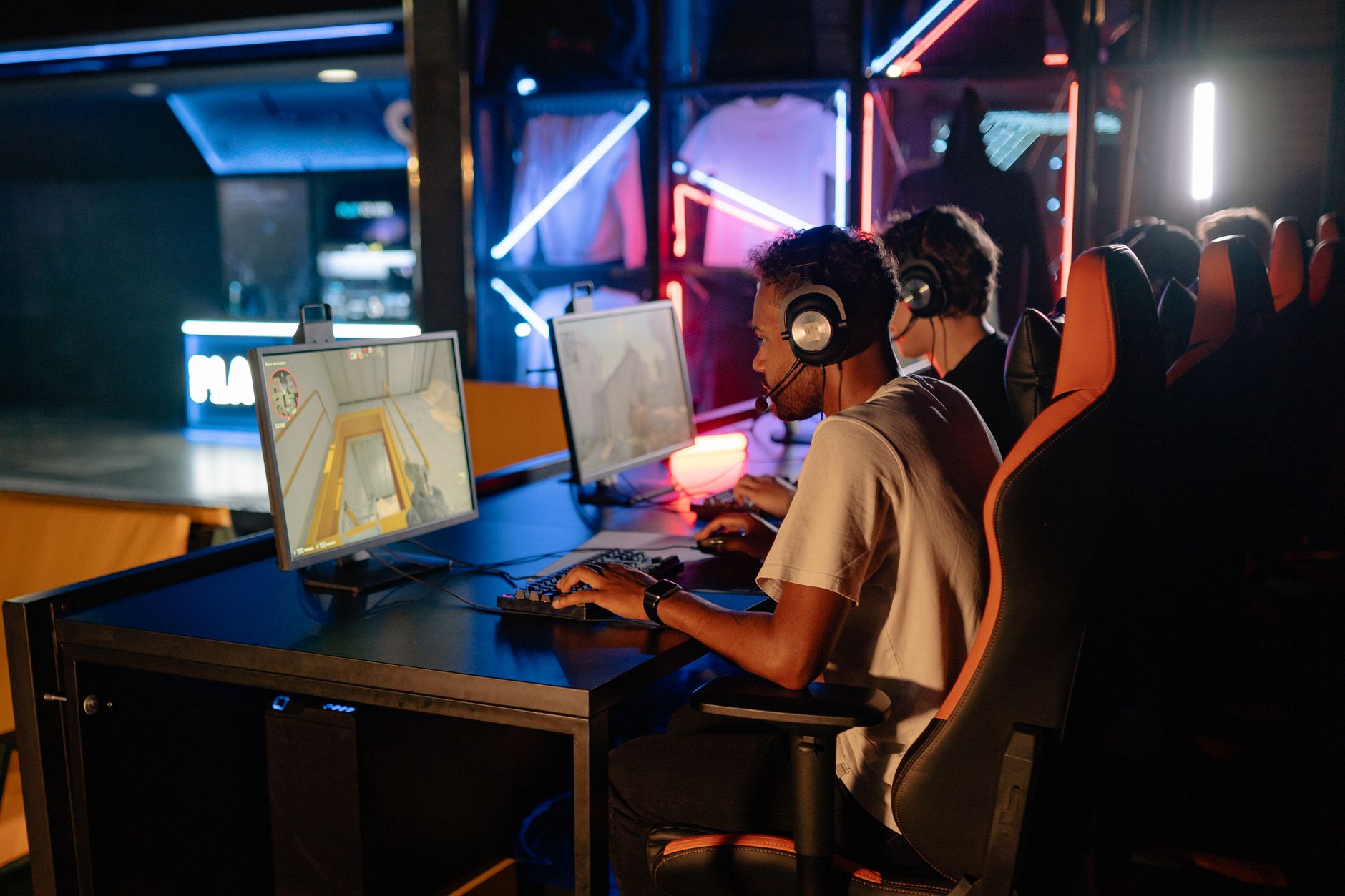
 Photo: Alena Darmel / Pexels
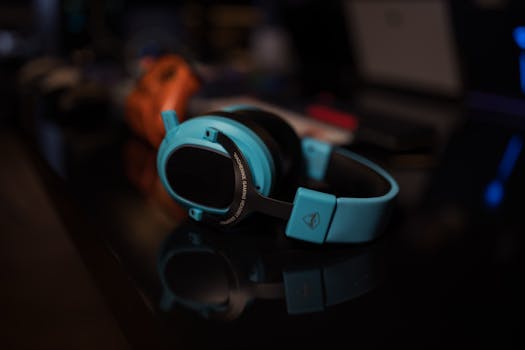 Photo: Matheus Bertelli / Pexels
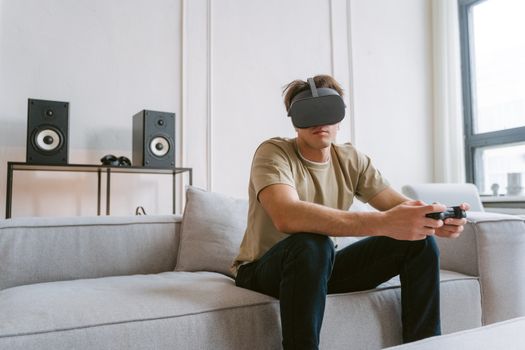 Photo: Tima Miroshnichenko / Pexels