Find Your Edge: The Best Gaming Mouse for FPS Games
best gaming mouse for fps games

Find Your Edge: The Best Gaming Mouse for FPS Games

Master your aim and reaction time with the ultimate FPS gaming mouse, designed for precision and competitive advantage.

Elevate Your Game Now

Key Takeaways

  • ✓ Sensor precision (DPI/CPI) is paramount for accurate tracking in FPS.
  • ✓ Weight and balance significantly impact flick shots and sustained aiming.
  • ✓ Polling rate determines how quickly your mouse reports its position to the computer.
  • ✓ Comfortable grip style (palm, claw, fingertip) is crucial for long gaming sessions.

How It Works

1
Understand Your Grip Style

Before buying, analyze how you hold your mouse. This dictates optimal mouse shape and size for maximum comfort and control.

2
Prioritize Sensor Performance

Look for top-tier optical sensors with high DPI and CPI, ensuring pixel-perfect tracking without acceleration or jitter. This is critical for competitive play.

3
Consider Weight and Balance

Lighter mice generally allow for quicker movements, but some players prefer a bit more heft. Test different weights to find your sweet spot for responsiveness and stability.

4
Evaluate Features and Customization

Beyond the basics, consider programmable buttons, polling rate, and software customization. These features can fine-tune your experience and give you an edge.

Why Your Mouse is Your Most Crucial Weapon in FPS Games

A close-up view of a gaming setup featuring a water bottle and computer mouse in a dimly lit environment. Photo: Ron Lach / Pexels
In the fast-paced world of First-Person Shooters (FPS), every millisecond and every pixel matters. Your aim, reaction time, and overall performance are inextricably linked to the quality and suitability of your gaming mouse. It's not just a peripheral; it's an extension of your will, translating your thoughts into precise in-game actions. While a powerful graphics card renders stunning visuals and a high refresh rate monitor displays them smoothly, it’s your mouse that determines where your crosshair lands and how quickly you can acquire a target. A sub-par mouse can introduce input lag, inconsistent tracking, or simply feel uncomfortable, directly hindering your ability to land critical shots or react to sudden threats. Conversely, a high-performance gaming mouse designed specifically for FPS can elevate your gameplay, giving you the competitive edge needed to climb leaderboards and dominate opponents. Think about the core mechanics of an FPS game: aiming, shooting, and rapid movement. Each of these actions relies heavily on your mouse. Precision aiming, whether it's a pixel-perfect headshot or tracking a fast-moving enemy, demands a sensor that can accurately register every subtle movement you make. Reaction time is equally vital; the faster your mouse can transmit your physical input to the game, the quicker you can respond to an enemy peeking a corner or a grenade flying your way. Furthermore, the physical comfort and ergonomic design of the mouse play a significant role in sustained performance. Long gaming sessions can lead to fatigue if your mouse doesn't fit your hand well, affecting your consistency and accuracy over time. This is why investing in the right gaming peripheral, particularly your mouse, is not just a luxury but a strategic necessity for serious FPS players. We'll delve into the specific characteristics that define a superior FPS gaming mouse, exploring sensor technology, weight, shape, and other critical factors that contribute to an unparalleled gaming experience. Understanding these elements will empower you to make an informed decision and find the perfect instrument to sharpen your skills and elevate your play.

Deciphering the Tech: Sensor Performance and Polling Rate for Precision
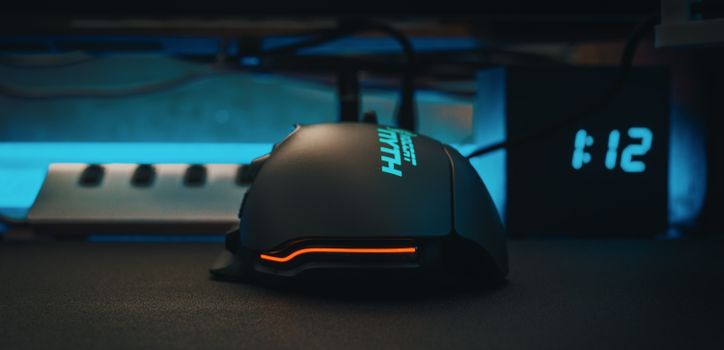
Modern computer mouse for users of massively multiplayer online role playing game placed on table against electronic clock Photo: FOX ^.ᆽ.^= ∫ / Pexels
At the heart of any great FPS gaming mouse lies its sensor and its polling rate. These two technical specifications are arguably the most critical factors determining your mouse's accuracy and responsiveness. A high-quality optical sensor is the brain of your mouse, responsible for tracking its movement across your mouse pad and translating that into on-screen cursor movement. For FPS games, you want a sensor that offers flawless tracking, meaning it registers every movement without acceleration, deceleration, or jitter. Mouse acceleration, in particular, is an enemy of consistency; it causes your cursor to move further when you move the mouse faster, making muscle memory development incredibly difficult. Top-tier optical sensors from manufacturers like PixArt (e.g., PMW3360, HERO, Focus+) are renowned for their 1:1 tracking, ensuring that every physical movement corresponds precisely to an identical in-game movement, which is essential for developing consistent aim. Dots Per Inch (DPI) or Counts Per Inch (CPI) is a common metric, indicating how many pixels your cursor moves per inch of physical mouse movement. While higher DPI numbers often sound impressive, it's a common misconception that more is always better. Most professional FPS players use relatively low DPI settings (400-1600 DPI) combined with lower in-game sensitivities. This allows for larger, more deliberate physical movements for fine-tuned aiming, reducing the chance of overshooting targets. What truly matters is the sensor's ability to track accurately at your preferred DPI, without any artificial smoothing or prediction. Look for sensors that offer a wide, native DPI range and allow for precise adjustments through accompanying software. Polling rate, measured in Hertz (Hz), dictates how many times per second your mouse reports its position to your computer. A 1000Hz polling rate means the mouse reports its position 1000 times per second, or every 1 millisecond. For competitive FPS, a 1000Hz polling rate is the industry standard and highly recommended. While the human eye might not perceive the difference between 500Hz and 1000Hz, this higher reporting rate reduces input lag, ensuring that your movements are registered as quickly as possible. In a game where fractions of a second can determine victory or defeat, minimizing input lag is paramount. Together, a flawless sensor and a high polling rate form the bedrock of a responsive and precise aiming experience, giving you the confidence that your mouse will faithfully execute your commands.

Ergonomics and Weight: Finding Your Perfect Grip and Balance
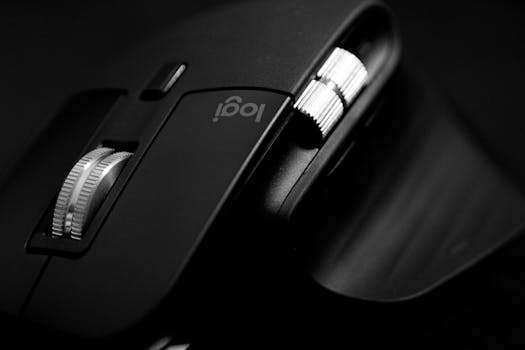
Close-up of a sleek, modern black gaming mouse with metallic scroll wheels. Photo: Lucas Pezeta / Pexels
Beyond the internal technology, the physical attributes of a gaming mouse – its shape, size, and weight – are equally critical for optimal FPS performance. The best gaming mouse for FPS games isn't just about raw specs; it's about how well it fits your hand and your unique grip style. There are three primary grip styles: palm, claw, and fingertip. A palm grip involves your entire hand resting on the mouse, offering stability and control for sweeping movements. Claw grip sees your palm rest on the back of the mouse while your fingers are arched, providing a balance of control and quick finger movements. Fingertip grip involves only your fingertips touching the mouse, allowing for maximum agility and micro-adjustments. Each grip style benefits from different mouse shapes and sizes. Understanding your own grip is the first step in finding an ergonomically sound mouse that minimizes fatigue and maximizes comfort during intense, prolonged gaming sessions. A mouse that feels natural in your hand allows you to focus entirely on the game, not on adjusting your grip or combating discomfort. Weight is another highly subjective but crucial factor. Traditionally, lighter mice have been favored by many FPS players for their ability to facilitate faster flick shots and rapid changes in direction. A lighter mouse (typically under 80 grams) requires less effort to move, reducing wrist and arm fatigue over time and potentially leading to quicker reaction times. However, some players prefer a slightly heavier mouse (80-100 grams) for the added sense of control and stability it provides, especially for precise tracking or when making very small, deliberate adjustments. Many modern gaming mice offer weight customization options, allowing you to add or remove small weights to fine-tune the feel. The balance of the mouse is also important; an unevenly weighted mouse can feel awkward and unpredictable. When evaluating a mouse, consider not just its total weight but also how that weight is distributed. The ideal weight and balance will enable you to perform both large sweeping movements and tiny micro-adjustments with equal ease and precision. This personalized fit and feel are what truly unlock your aiming potential, making the mouse an intuitive extension of your movements rather than a cumbersome tool. Remember, the goal is to find a mouse that disappears in your hand, allowing your focus to remain entirely on the critical moments of gameplay, an essential aspect for any serious competitive gamer.

Essential Features and Common Mistakes to Avoid When Choosing Your FPS Mouse
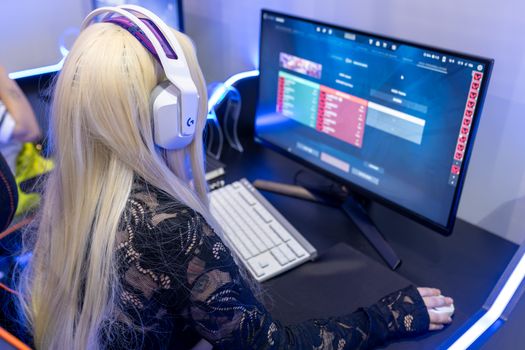
Young woman gaming at a PC high-tech setup, wearing headphones. Photo: Matheus Bertelli / Pexels
Beyond the core elements of sensor performance, ergonomics, and weight, several other features can significantly enhance your FPS experience. Understanding these can help you make a more informed decision and avoid common pitfalls. Firstly, consider the quality of the mouse switches. The switches under the left and right click buttons determine the tactile feel, responsiveness, and durability of your clicks. Reputable brands often use Omron, Kailh, or optical switches, known for their crisp actuation and longevity. A good switch provides satisfying feedback and prevents accidental double-clicks, which can be detrimental in clutch situations. Secondly, flexible and lightweight cables are crucial for wired mice. A stiff, braided cable can create drag and interfere with smooth mouse movements, effectively negating the benefits of a lightweight mouse. Many modern wired mice feature paracord-like cables that are almost imperceptible during gameplay. For wireless mice, ensure they utilize a low-latency 2.4GHz connection with a dedicated dongle, as Bluetooth connections typically introduce too much lag for competitive FPS. Programmable buttons are another valuable feature, allowing you to bind in-game actions like grenades, melee attacks, or weapon swaps to easily accessible mouse buttons. However, for FPS, simplicity often trumps complexity. While a few well-placed side buttons can be beneficial, an excessive number of buttons can lead to accidental presses or complicate your grip. Aim for utility without sacrificing comfort or control. Lastly, high-quality mouse feet (skates) made of PTFE (Teflon) are essential for smooth gliding. Good mouse feet minimize friction, allowing for effortless movement across your mouse pad. Worn-out or poor-quality feet can create drag and inconsistent tracking. Now, let's address some common mistakes to avoid. Don't fall for the 'higher DPI is always better' myth. As discussed, a moderate DPI with lower in-game sensitivity is often preferred for precision. Another mistake is neglecting your mouse pad. Even the best gaming mouse for FPS games will underperform on a dirty, uneven, or unsuitable surface. Invest in a high-quality, large mouse pad that complements your mouse and grip style. Also, avoid mice with aggressive, 'gamer-centric' designs that prioritize aesthetics over ergonomics; comfort and performance should always come first. Finally, don't assume that the most expensive mouse is automatically the best for you. Price doesn't always correlate with suitability for your specific needs. Research, read reviews, and if possible, try out different shapes and weights to find your personal best fit.

Comparison

FeatureBest Option (Overall)Alternative 1 (Lightweight)Alternative 2 (Wireless)
SensorPixArt PMW3370/HEROPixArt PMW3399Logitech HERO 25K
Weight (g)60-70g40-55g60-80g
Grip StyleVersatile (Claw/Fingertip)Fingertip/ClawPalm/Claw
Polling Rate1000Hz1000Hz1000Hz
Buttons5-7 Programmable5-6 Programmable5-8 Programmable
ConnectivityWired (Paracord)Wired (Flexible)2.4GHz Wireless
Software Customization
RGB LightingMinimalMinimalOptional

What Readers Say

"After switching to a lightweight, high-DPI mouse, my flick shots in Valorant have become incredibly consistent. This article helped me understand why my old mouse was holding me back. My K/D ratio has noticeably improved."

Alex 'Phantom' Chen · Los Angeles, CA

"The advice on sensor performance and polling rate for the best gaming mouse for FPS games was spot on. My new mouse feels like an extension of my hand, and tracking enemies in Apex Legends is so much smoother now."

Sarah 'Sharpshooter' Miller · Dallas, TX

"I finally found a mouse that perfectly fits my claw grip thanks to this guide. My wrist fatigue is gone, and I can play Call of Duty for hours with sustained accuracy. It's a game-changer for competitive play."

Mike 'Headshot' Johnson · Chicago, IL

"While the article was incredibly thorough, I wish there were more specific model recommendations within each category. However, the technical breakdown allowed me to confidently choose a great wireless FPS mouse that suits me."

Jessica 'Jinx' Lee · New York, NY

"As a casual FPS player looking to get more serious, this guide to the best gaming mouse for FPS games was invaluable. It broke down complex topics into understandable advice, helping me upgrade my setup and improve my in-game performance."

David 'Dante' Kim · Seattle, WA

Frequently Asked Questions

What is the most important factor in a gaming mouse for FPS games?

The most important factor is the sensor's precision and accuracy, ensuring flawless 1:1 tracking without acceleration or jitter. This directly translates to how accurately your in-game crosshair reflects your physical mouse movements, which is paramount for competitive FPS.

Is a wireless gaming mouse good for FPS games?

Yes, modern wireless gaming mice from reputable brands are excellent for FPS games. They utilize low-latency 2.4GHz wireless technology that often performs as well as, or even better than, wired connections in terms of responsiveness, offering freedom of movement without cable drag.

How do I find the right DPI setting for FPS games?

Finding the right DPI (or CPI) is highly personal. Start with a moderate DPI (e.g., 800 or 1600) and adjust your in-game sensitivity until you can comfortably perform a 180-degree turn with a single sweep of your mouse. Experiment to find a balance between quick turning and precise aiming.

Are expensive gaming mice always better for FPS?

Not necessarily. While higher-priced mice often feature top-tier sensors and build quality, the 'best' mouse is ultimately one that fits your hand and grip style perfectly and offers the features you prioritize. A mid-range mouse with excellent ergonomics can outperform an expensive one that doesn't suit you.

What's the difference between DPI and CPI?

DPI (Dots Per Inch) and CPI (Counts Per Inch) are often used interchangeably, and for marketing purposes, they essentially refer to the same thing: the mouse sensor's sensitivity. It indicates how many 'counts' or 'dots' the mouse reports per inch of physical movement.

Who should prioritize a lightweight gaming mouse?

Players who frequently rely on fast flick shots, large sweeping movements, or those who experience wrist/arm fatigue during long gaming sessions should prioritize a lightweight gaming mouse. It reduces the physical effort required to move the mouse quickly and precisely.

Can my mouse pad affect my FPS performance?

Absolutely. A high-quality mouse pad provides a consistent surface for your mouse sensor to track on, minimizing inconsistencies and maximizing precision. Different surfaces (cloth, hard) offer varying levels of glide and stopping power, which can impact your aim.

What trends are emerging in FPS gaming mice?

Current trends include ultra-lightweight designs (often with perforated shells), increasingly efficient wireless technology with longer battery life, higher polling rates (2000Hz, 4000Hz, and even 8000Hz are emerging), and optical switches for enhanced durability and speed.

Choosing the best gaming mouse for FPS games is a pivotal step towards unlocking your full potential. By understanding the critical factors of sensor performance, ergonomics, weight, and essential features, you're now equipped to make an informed decision. Don't let your gear hold you back – upgrade your precision, improve your reaction time, and dominate the battlefield with the perfect FPS mouse.

Topics: best gaming mouse for fps gamesFPS gaming mousecompetitive gaming mouselightweight gaming mousehigh DPI mouse
Leo List

IE Escorts NO Escorts US Escorts NZ Escorts AU Escorts
Brampton weed
Adultwork EstrelaBet Vai de Bet R7 Bet Betão Galera Bet Rainbet Bet9ja Shop SportyBet BetKing Sisal Loto Foot Hollywoodbets YesPlay Odibets RushBet Jugabet BetWarrior BetCity MSport betPawa Fortebet