Demystifying US Esports Betting Legality: Your Expert Guide
esports betting legality US

Demystifying US Esports Betting Legality: Your Expert Guide

Unravel the intricate legal framework surrounding esports betting across the United States to bet with confidence.

Explore Legal Options

Key Takeaways

  • ✓ Esports betting legality in the US is determined at the state level, not federally.
  • ✓ Many states regulate esports betting under existing sports betting laws, while others have specific provisions or prohibitions.
  • ✓ The Wire Act of 1961 primarily targets sports betting but has implications for online gambling, though its application to esports is debated.
  • ✓ Offshore betting sites operate outside US jurisdiction, posing risks to consumer protection and legal recourse.
  • ✓ The skill vs. chance debate is crucial in determining if esports wagering falls under gambling laws in some states.

How It Works

1
Understand the Federal Landscape

Recognize that federal laws like the Wire Act provide a broad framework, but direct regulation of esports betting is not federal. Individual states hold the primary authority over its legality within their borders.

2
Identify Your State's Stance

Research the specific laws and regulations pertaining to esports betting in your current state of residence. States vary widely, with some fully regulating it, others prohibiting it, and many still in a gray area.

3
Distinguish Regulated vs. Unregulated Platforms

Only use platforms explicitly licensed and regulated by your state's gaming commission. Avoid offshore sites, as they offer no legal protection and can lead to issues with withdrawals or fairness.

4
Comply with Age and Location Requirements

Ensure you meet the minimum legal age for gambling in your state (typically 21) and that you are physically located within state lines when placing bets. Geolocation technology is used to enforce this.

The Federal Framework and Its Limited Reach
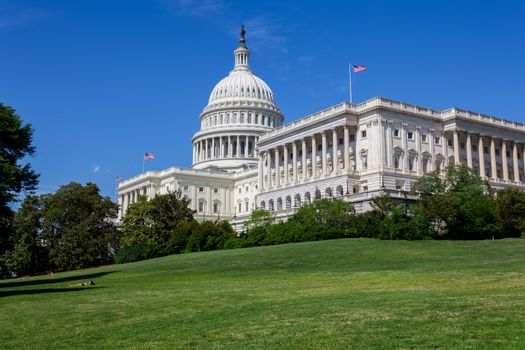
Stunning photo of the United States Capitol under a clear blue sky, showcasing neoclassical architecture. Photo: Simon Gagner / Pexels
When we seek to explain esports betting legality US, it's crucial to first understand the overarching federal landscape, which, paradoxically, offers very little direct guidance on esports. Unlike traditional sports betting, which has seen significant federal intervention and subsequent deregulation with the Professional and Amateur Sports Protection Act (PASPA) repeal in 2018, esports occupies a unique position. The primary federal law often cited in discussions of online gambling is the Wire Act of 1961. Originally designed to combat organized crime by prohibiting the use of wire communication facilities for interstate wagering on sporting events, its application to online gambling, and particularly to esports, has been a subject of extensive legal debate. For decades, the Department of Justice interpreted the Wire Act broadly to apply to all forms of online gambling. However, a 2011 opinion from the DOJ narrowed this interpretation, stating that the Wire Act only applies to sports betting, not other forms of online gambling like poker or casino games. This shift created a legal vacuum that states were quick to fill, allowing for the proliferation of intrastate online lottery and casino operations. However, the saga didn't end there. In 2018, the DOJ under the Trump administration reversed course, issuing a new opinion that restored the broader interpretation, potentially impacting all forms of interstate online gambling. This reversal was challenged in court, and ultimately, the First Circuit Court of Appeals sided with the narrower 2011 interpretation, limiting the Wire Act's scope primarily to sports betting. The Supreme Court declined to hear an appeal, leaving the First Circuit's ruling as the prevailing interpretation. What does this mean for esports betting? If esports is legally classified as 'sports betting' in a given state, then the interstate transmission of bets could potentially fall under the Wire Act's purview. However, many legal scholars argue that esports, while competitive, doesn't neatly fit the traditional definition of 'sport' as envisioned by the 1961 legislation. This ambiguity leaves considerable room for state-level interpretation and regulation, making the federal stance more of a backdrop than a direct regulatory force. As such, the journey to explain esports betting legality US must primarily focus on the granular details of state laws. This decentralized approach means that a bet that is perfectly legal in one state might be strictly prohibited just across the border, creating a complex patchwork of regulations that bettors must navigate carefully. The lack of a clear, unified federal stance puts the onus squarely on individual states to define, regulate, or prohibit esports wagering, leading to the varied landscape we observe today. Understanding gaming regulations is paramount.

State-by-State Breakdown: A Patchwork of Regulations

Vibrant map of the USA painted on pavement, showcasing bold state colors. Photo: Giant Asparagus / Pexels
The true complexity of esports betting legality US emerges when we delve into the state-by-state regulations. Post-PASPA repeal in 2018, individual states gained the authority to legalize and regulate sports betting. This has led to a diverse and often confusing landscape where some states have embraced esports betting with specific legislation, others have included it under their broader sports betting frameworks, and many still prohibit it entirely or have yet to address it. For instance, states like New Jersey, Nevada, and Colorado have been at the forefront of regulating esports betting. New Jersey, a pioneer in online gambling, explicitly allows esports wagering under its existing sports betting laws, requiring events to be sanctioned and participants to be of legal age. Nevada, the traditional gambling hub, also permits esports betting, albeit often on a case-by-case basis requiring approval from the Nevada Gaming Control Board for specific events. Colorado's legislation is also progressive, classifying esports as a 'sport' for betting purposes and allowing licensed operators to offer markets. These states generally recognize the growing popularity of esports and the potential for significant tax revenue, leading them to establish clear regulatory pathways. Conversely, many states that have legalized sports betting have not explicitly addressed esports. In these jurisdictions, the legality often hinges on whether esports is considered a 'sport' under the state's existing sports betting statutes. This ambiguity can lead to situations where operators are hesitant to offer esports markets without specific guidance, or where such offerings might exist in a legal gray area. Some states have even explicitly excluded esports from their sports betting bills, effectively prohibiting it. The distinction between 'skill-based' games and 'games of chance' also plays a significant role here. While most traditional sports are clearly skill-based, the debate around certain esports titles, particularly those with elements of randomness or 'luck,' can complicate their classification under gambling laws. This ongoing debate affects not only traditional betting but also fantasy esports, which operates under different legal precedents, often falling under 'fantasy sports' exemptions rather than traditional gambling laws. Furthermore, some states, particularly those with more conservative gambling stances, have no provisions for esports betting whatsoever, treating it implicitly as an illegal form of gambling. The enforcement in these states can vary, but residents attempting to place bets through unregulated channels face significant legal risks. The regulatory bodies, typically state gaming commissions or lottery boards, are responsible for licensing operators, ensuring fair play, verifying age and location, and collecting taxes. Their approach to esports reflects the state's overall philosophy towards gambling and its willingness to adapt to new forms of entertainment. As the esports industry continues its rapid growth, more states are expected to revisit their gambling laws to either explicitly include or exclude esports, further shaping the intricate mosaic of US esports betting legality. Keeping abreast of these evolving state laws is paramount for anyone interested in participating in the esports betting market. This dynamic environment necessitates continuous monitoring of legislative developments and regulatory updates across the nation.

Navigating the Legal Landscape: Offshore vs. Regulated Platforms

Hand interacting with buttons on a colorful casino slot machine interface. Photo: Ercan Evcimen / Pexels
Understanding the nuances of esports betting legality US is incomplete without a clear distinction between regulated, state-licensed platforms and unregulated, offshore betting sites. This difference is not merely a matter of preference but a critical legal and financial safeguard for consumers. Regulated platforms operate under strict oversight from state gaming commissions. These commissions ensure that operators adhere to stringent rules regarding fair play, responsible gambling, data security, and financial transparency. When you place a bet on a licensed platform, you have legal recourse if disputes arise, and your funds are typically protected in segregated accounts. These platforms are required to verify your age and location rigorously, often using geolocation technology to confirm you are within state borders where betting is legal. They also contribute significant tax revenue to the state, which is often earmarked for public services. Offshore betting sites, on the other hand, operate outside the jurisdiction of US law. While many advertise their services to American consumers, they are not licensed or regulated by any US state or federal authority. This means that if an issue arises – be it a dispute over winnings, unfair practices, or even outright fraud – you have virtually no legal protection. Funds deposited with offshore sites are not guaranteed, and withdrawals can be problematic or even impossible. Furthermore, engaging with these sites can carry legal risks for individuals, depending on specific state laws, although enforcement against individual bettors is rare. The primary legal risk often lies with the operators themselves, but the lack of consumer protection is the most significant deterrent. Many offshore sites also lack robust responsible gambling tools, which are mandatory for regulated platforms, potentially exposing vulnerable individuals to greater harm. Responsible gaming practices are crucial. The allure of offshore sites often stems from their wider availability across states where regulated betting is not yet legal, or their offering of a broader range of betting markets. However, these perceived advantages come with substantial, often hidden, risks. The push for state-level regulation in the US aims to bring these activities into a legal, safe, and taxable environment, protecting consumers and generating revenue. As more states legalize and regulate esports betting, the incentive to use offshore sites diminishes. It is always advisable to prioritize platforms that explicitly display their state licenses and regulatory compliance. Always verify an operator's licensing status through the relevant state gaming commission website before depositing funds or placing bets. This due diligence is fundamental to safely and legally participate in the growing esports betting market within the United States, safeguarding both your finances and your legal standing. The stark contrast in consumer protection and legal recourse between these two types of platforms cannot be overstated, making the choice of platform a pivotal decision for any bettor.

Future Trends and Navigating the Evolving Landscape

Close-up of professionals signing a business contract indoors, emphasizing agreement and documentation. Photo: Kampus Production / Pexels
The landscape of esports betting legality US is far from static; it is a dynamic and rapidly evolving domain. Several key trends are likely to shape its future, influencing both legislative efforts and operational practices. Firstly, as the esports industry continues its meteoric rise in popularity and economic impact, more states are expected to consider or explicitly legislate for esports betting. The recognition of esports as a legitimate competitive activity, attracting millions of viewers and generating significant revenue, makes it an increasingly attractive target for states looking to expand their tax bases. This will likely lead to more states classifying esports as a 'sport' for betting purposes or creating specific regulatory frameworks tailored to its unique characteristics. Secondly, the distinction between skill-based games and games of chance will remain a critical legal battleground. While many prominent esports titles like League of Legends, Dota 2, and CS:GO are widely accepted as skill-based, the introduction of new genres or specific game modes with higher elements of randomness could complicate regulatory classification. This debate also impacts fantasy esports, which currently enjoys broader legality due to its classification under fantasy sports laws, distinct from traditional sports betting. Any shift in this interpretation could significantly alter the availability and regulation of fantasy esports platforms. Thirdly, federal intervention, while currently limited, cannot be entirely ruled out. A future Congress or Department of Justice could re-examine the Wire Act or propose new federal legislation specifically addressing online gambling or esports. However, given the current political climate and the established precedent of state autonomy in gambling regulation, such broad federal action is less likely than continued state-level evolution. Instead, federal agencies might focus on issues like consumer protection, anti-money laundering, or responsible gambling at a national level, complementing state efforts rather than superseding them. Fourthly, technological advancements will play a pivotal role. Improvements in geolocation technology, artificial intelligence for fraud detection, and biometric verification will enhance regulatory compliance and consumer safety. The integration of blockchain technology and cryptocurrencies could also present new challenges and opportunities for regulators, requiring adaptive legal frameworks. Finally, the role of esports organizations and game publishers in shaping the regulatory environment will grow. Their stance on integrity, data sharing, and official league partnerships with betting operators will influence how states approach licensing and regulation. Many publishers are actively involved in maintaining competitive integrity, which is a cornerstone for legitimate betting markets. Navigating this evolving landscape requires continuous vigilance and adaptability from both bettors and operators. Staying informed about legislative updates, understanding the specific nuances of state laws, and prioritizing regulated platforms will be essential for anyone participating in the future of esports betting in the US. The journey to explain esports betting legality US is ongoing, reflecting the dynamic nature of both technology and law.

Comparison

FeatureRegulated US PlatformsOffshore PlatformsDaily Fantasy Esports
Legal StatusState-licensed and legalUnregulated, potentially illegalGenerally legal under fantasy sports laws
Consumer ProtectionHigh (state oversight)None (no legal recourse)Moderate (industry self-regulation/state oversight)
Withdrawal ReliabilityHigh (guaranteed by law)Variable, often problematicHigh (within platform rules)
Responsible Gambling ToolsMandatory and robustOften limited or absentPresent, but varies by platform
Age VerificationStrict (21+ typically)Lax or non-existentStrict (18+ or 21+ depending on state)
TaxationWinnings are taxableWinnings taxable, but reporting complexWinnings are taxable
Geolocation Required

What Readers Say

"Before reading this, I was so confused about where I could legally bet on League of Legends. This article truly helped explain esports betting legality US in a way that made sense, and now I use a state-licensed app with confidence. Highly recommended for any US bettor!"

Alex P. · New Jersey, USA

"The breakdown of state-specific laws was incredibly useful. I'd been hesitant to get into esports betting because of the legal uncertainties, but this guide clarified everything. It's great to know I'm betting safely and legally now."

Samantha L. · Colorado, USA

"This resource gave me the confidence to start betting on Valorant. Knowing the difference between offshore and regulated sites, as explained here, saved me from potential headaches. I appreciate the detailed insights into explain esports betting legality US."

Mark R. · Nevada, USA

"While my state doesn't have legal esports betting yet, this article provided a clear understanding of what to look for when it eventually does. It's a bit disappointing I can't participate, but the information was invaluable for future planning."

Chloe G. · Texas, USA

"As someone who follows a lot of competitive gaming, I've always wanted to bet. This guide on explain esports betting legality US outlined the steps to ensure I'm compliant with local laws. It's comprehensive and easy to understand for beginners."

David W. · Michigan, USA

Frequently Asked Questions

Is esports betting legal everywhere in the US?

No, esports betting legality in the US is determined by individual states. Some states have fully legalized and regulated it, others include it under general sports betting laws, while many still prohibit it or have not yet addressed it. You must check your specific state's laws.

Are offshore esports betting sites safe to use?

No, offshore esports betting sites are not regulated by US law and offer no consumer protection. Using them can expose you to risks like unfair practices, difficulty withdrawing winnings, or even potential legal issues. It's always recommended to use state-licensed platforms.

How do I know if an esports betting site is legal in my state?

To confirm if an esports betting site is legal, look for explicit licensing information from your state's gaming commission or regulatory body. Legal sites will prominently display their state license and often require geolocation to ensure you are within legal state borders.

Do I have to pay taxes on esports betting winnings?

Yes, just like with other forms of gambling, winnings from legal esports betting are considered taxable income by the IRS. It's your responsibility to report these winnings on your federal and state tax returns, even if the operator doesn't issue a W-2G form.

What's the difference between esports betting and fantasy esports?

Esports betting typically involves placing wagers on the outcomes of real-world esports matches, similar to traditional sports betting. Fantasy esports, on the other hand, usually involves drafting a team of players and earning points based on their real-life performance, often falling under different 'fantasy sports' legal exemptions, which are generally more widespread.

Who should use this guide to explain esports betting legality US?

This guide is for anyone in the US interested in esports betting, from casual fans to serious bettors, who wants to understand the legal landscape. It's particularly helpful for those new to betting, or those residing in states with evolving gambling laws, to ensure they bet legally and responsibly.

What are the risks of illegal esports betting?

The risks of illegal esports betting include forfeiture of winnings, lack of legal recourse for disputes, exposure to fraudulent operators, identity theft, and potential legal penalties depending on your state's laws. Stick to regulated platforms for safety and security.

Will federal laws change to standardize esports betting across the US?

While possible, it's currently unlikely for federal laws to completely standardize esports betting due to the established precedent of state autonomy in gambling regulation. Future federal action is more probable in areas like consumer protection or anti-money laundering, complementing state-level oversight rather than replacing it.

Navigating the complex world of esports betting legality in the US doesn't have to be daunting. With this comprehensive guide, you're now equipped with the knowledge to make informed, legal, and safe betting decisions. Explore regulated platforms today and engage with the exciting world of esports wagering responsibly.

Topics: esports betting legality USUS esports gambling lawslegal esports betting statesonline esports wageringesports regulation America
Leo List

IE Escorts NO Escorts US Escorts NZ Escorts AU Escorts
Brampton weed
Adultwork EstrelaBet Vai de Bet R7 Bet Betão Galera Bet Rainbet Bet9ja Shop SportyBet BetKing Sisal Loto Foot Hollywoodbets YesPlay Odibets RushBet Jugabet BetWarrior BetCity MSport betPawa Fortebet