✓ The first interactive electronic game, 'Cathode Ray Tube Amusement Device,' was patented in 1947.
✓ Spacewar! (1962) is often cited as one of the earliest digital computer games.
✓ Pong (1972) by Atari popularized arcade video games and home consoles.
✓ The 'Video Game Crash of 1983' nearly destroyed the industry, but Nintendo's NES revived it.
How It Works
1
Explore Early Innovations
Delve into the foundational years of gaming, discovering the scientific experiments and academic projects that laid the groundwork. Understand the pioneers who envisioned interactive entertainment.
2
Witness the Arcade Boom
Trace the explosive rise of arcade machines and the introduction of iconic titles that captivated a generation. Learn how coin-operated games became a cultural phenomenon.
3
Experience Console Generations
Follow the progression of home video game consoles, from the Magnavox Odyssey to the latest PlayStation and Xbox. See how technology drove new gameplay possibilities and market shifts.
4
Understand Modern Gaming
Examine the advent of online multiplayer, esports, mobile gaming, and virtual reality, shaping the diverse landscape of today's video game industry. Discover how gaming became a global entertainment powerhouse.
The Dawn of Digital Entertainment: Pre-Commercial Era (1940s-1970s)
Photo: Alena Darmel / Pexels
The story of video games doesn't begin in arcades or living rooms, but in scientific laboratories and university computer labs. Long before the term 'video game' was coined, researchers and engineers were experimenting with interactive displays and digital simulations. The very first glimmer can be traced back to the 'Cathode Ray Tube Amusement Device,' patented in 1947 by Thomas Goldsmith Jr. and Estle Ray Mann. While not a commercial product, it demonstrated the potential for electronic interaction. Fast forward to 1958, William Higinbotham created 'Tennis for Two' on an oscilloscope at Brookhaven National Laboratory. This simple two-player game, resembling a side-view of tennis, used an analog computer and offered a rudimentary form of interactive competition, drawing significant public interest during open house events. However, it was 'Spacewar!' developed in 1962 by Steve Russell and his team at MIT on a PDP-1 minicomputer, that truly set the stage. This groundbreaking game pitted two spaceships against each other in a dogfight around a star, complete with gravity effects. It was freely distributed and became a staple for early computer enthusiasts, showcasing the power of digital programming for entertainment. These early experiments were not about profit; they were about exploring the capabilities of nascent computer technology. They were complex, often requiring specialized hardware, and were mostly confined to academic or research settings. Yet, they fostered a nascent community of programmers and engineers who saw the immense potential for interactive digital experiences. The foundation for an entire industry was slowly being laid, piece by digital piece, far from the public eye. The ingenuity demonstrated in these early creations highlights the pioneering spirit that underpins the entire history of gaming. The evolution of gaming technology from these early devices to today's sophisticated systems is truly remarkable.
The Arcade Explosion and the Rise of Home Consoles (1970s-Early 1980s)
Photo: James Collington / Pexels
The 1970s marked the commercial birth of the video game industry. In 1971, Nolan Bushnell and Ted Dabney created 'Computer Space,' an arcade game based on 'Spacewar!'. While commercially unsuccessful, it paved the way for their next venture. In 1972, they founded Atari, and their first major hit, 'Pong,' became a cultural phenomenon. 'Pong' was simple: two paddles, a ball, and a score. Its intuitive gameplay and competitive nature made it an instant success in arcades, bars, and public spaces, legitimizing video games as a viable form of entertainment. Simultaneously, the first home video game console, the Magnavox Odyssey, was released in 1972. While rudimentary, it allowed players to experience interactive games on their television screens, albeit with simple graphics and overlays. Atari soon followed with its own home version of Pong, and the market began to expand. The mid-to-late 1970s saw a surge in arcade hits like 'Space Invaders' (1978), which introduced the concept of continuous background music and high scores, and 'Asteroids' (1979), known for its vector graphics and challenging gameplay. These games weren't just popular; they were revolutionary, pushing technological boundaries and creating new genres. The early 1980s brought even more iconic titles such as 'Pac-Man' (1980), 'Donkey Kong' (1981), and 'Frogger' (1981), solidifying the arcade's place as a social hub and a powerhouse of innovation. The allure of chasing high scores and competing with friends made arcades vibrant centers of youth culture. The home console market also matured with systems like the Atari 2600 (1977), which introduced interchangeable cartridges, allowing for a diverse library of games. This innovation transformed home gaming from a single-game experience to a multi-game platform, offering unprecedented choice and laying the groundwork for the modern console ecosystem. The sheer variety and accessibility of games during this period ignited a global passion for interactive entertainment.
Crash, Revival, and the Golden Age of Gaming (Mid-1980s-1990s)
Photo: Tomasz Filipek / Pexels
The rapid growth of the video game industry in the early 1980s led to an oversupply of low-quality games, consumer confusion, and a lack of innovation. This culminated in the 'Video Game Crash of 1983,' a period of severe market downturn that saw many companies go out of business and public interest wane. The industry was in crisis, but a savior emerged from Japan. Nintendo, a company with a long history of making playing cards and toys, launched the Family Computer (Famicom) in Japan in 1983, which later arrived in North America in 1985 as the Nintendo Entertainment System (NES). The NES was a game-changer. It introduced strict quality control over third-party developers, bundled with revolutionary titles like 'Super Mario Bros.' (1985) and 'The Legend of Zelda' (1986). These games set new standards for platforming and adventure, featuring expansive worlds, memorable characters, and innovative gameplay mechanics. The NES not only revived the market but also redefined what a video game could be, ushering in the 'Golden Age' of console gaming. The late 1980s and 1990s saw intense competition and technological leaps. Sega entered the console war with its Master System and, more notably, the Sega Genesis (Mega Drive in Europe) in 1989. The Genesis, with its 'blast processing' and the iconic 'Sonic the Hedgehog,' challenged Nintendo's dominance, fueling one of the most famous rivalries in gaming history. This era also saw the rise of PC gaming, with titles like 'Doom' (1993) pioneering the first-person shooter genre and 'Warcraft: Orcs & Humans' (1994) popularizing real-time strategy games. The introduction of CD-ROMs allowed for larger games with full-motion video and more complex audio. Then came the PlayStation (1994 in Japan, 1995 in North America) from Sony. Its focus on 3D graphics, a mature marketing strategy, and developer-friendly tools quickly made it a dominant force, bringing gaming to a broader, older audience. Titles like 'Final Fantasy VII' (1997) and 'Metal Gear Solid' (1998) showcased the power of 3D storytelling and cinematic experiences. This period was characterized by explosive creativity, technological advancement, and fierce competition, solidifying video games as a major entertainment medium. Discover more about the impact of iconic game franchises on popular culture during this pivotal time.
The Modern Era: Connectivity, Diversity, and Immersive Worlds (2000s-Present)
Photo: Yan Krukau / Pexels
The turn of the millennium ushered in an era defined by connectivity, graphical fidelity, and an unprecedented diversity of gaming experiences. The PlayStation 2 (2000), Xbox (2001), and Nintendo GameCube (2001) pushed 3D graphics to new heights and introduced integrated online multiplayer capabilities. The Xbox, in particular, championed online gaming with Xbox Live, setting the standard for console online services. PC gaming continued to thrive with the rise of massively multiplayer online role-playing games (MMORPGs) like 'World of Warcraft' (2004), creating persistent virtual worlds where millions of players could interact. The mid-2000s saw Nintendo innovate with motion controls through the Wii (2006), broadening gaming's appeal to casual players and families, while Sony's PlayStation 3 (2006) and Microsoft's Xbox 360 (2005) delivered high-definition graphics and further refined online experiences. This generation solidified gaming as a mainstream global phenomenon, with blockbuster titles like 'Grand Theft Auto V' (2013) achieving unprecedented sales. The late 2000s and 2010s witnessed the explosion of mobile gaming. Smartphones and tablets became ubiquitous, and app stores democratized game distribution, leading to casual hits like 'Angry Birds' (2009) and 'Candy Crush Saga' (2012) reaching billions of players. Indie game development also blossomed, empowered by digital distribution platforms like Steam and various app stores, allowing smaller studios to publish innovative and experimental titles without traditional publisher barriers. The current generation of consoles – PlayStation 5 (2020) and Xbox Series X/S (2020) – continues to push visual fidelity, reduce load times, and enhance immersion with features like ray tracing and haptic feedback. Virtual Reality (VR) and Augmented Reality (AR) are emerging as significant new frontiers, offering entirely new ways to experience games. Esports has transformed competitive gaming into a professional spectacle, attracting massive viewership and sponsorships. Cloud gaming services are also changing how games are accessed and played, potentially making high-end gaming accessible without powerful local hardware. The gaming industry today is a multi-billion dollar behemoth, constantly evolving, integrating new technologies, and exploring new narratives, proving its enduring power as a form of entertainment and artistic expression. The future promises even more interactive and immersive experiences, building upon this rich and dynamic history.
Comparison
Era
Key Innovation
Defining Game
Impact on Industry
Pre-Commercial (1940s-70s)
First interactive electronic displays
Spacewar! (1962)
Pioneered digital entertainment concepts
Arcade/Early Home (1970s-80s)
Coin-op machines, home consoles, cartridges
Pong (1972)
Commercialized gaming, established Atari
Revival/Golden Age (Mid-80s-90s)
NES, 3D graphics, CD-ROMs
Super Mario Bros. (1985)
Rescued industry, introduced iconic franchises
Modern Era (2000s-Present)
Online multiplayer, mobile, VR/AR, esports
World of Warcraft (2004)
Mainstreamed gaming, diversified platforms
What Readers Say
★★★★★
"This article on the history of video games timeline is incredibly thorough! I learned so much about the early days I never knew existed, from 'Tennis for Two' to the impact of the NES. Truly a fantastic read for any gaming enthusiast."
Alex J. · Seattle, WA
★★★★★
"As someone who grew up with an Atari 2600, this history of video games timeline brought back so many memories. The detailed accounts of the arcade boom and the crash of '83 were particularly insightful. Highly recommend!"
Maria S. · Austin, TX
★★★★★
"I'm a game developer, and understanding the history of video games timeline is crucial. This article provides an excellent, well-structured overview, giving me valuable context for current trends. The sections on console wars and PC gaming evolution were spot on."
David L. · Chicago, IL
★★★★★
"A very comprehensive look at the history of video games timeline. While it covers a lot, I would have loved to see a bit more on specific game development studios or more niche genres, but overall, it's an outstanding resource for beginners and seasoned gamers alike."
Sarah K. · Boston, MA
★★★★★
"From 'Spacewar!' to 'World of Warcraft,' this history of video games timeline perfectly captures the essence of each era. It's a great resource for educators or anyone wanting to understand the cultural significance of gaming."
Chris P. · Los Angeles, CA
Frequently Asked Questions
What is considered the first video game?
While definitions vary, 'Tennis for Two' (1958) by William Higinbotham is often cited as the first interactive electronic game designed purely for entertainment. However, the 'Cathode Ray Tube Amusement Device' was patented earlier in 1947, demonstrating similar principles.
Was there really a 'video game crash'?
Yes, the 'Video Game Crash of 1983' was a severe recession in the video game industry, primarily in North America. It was caused by market saturation, an influx of low-quality games, and intense competition, leading to significant financial losses and a near collapse of the console market.
How did Nintendo save the video game industry?
Nintendo's release of the Nintendo Entertainment System (NES) in 1985 (following the Famicom in Japan in 1983) is widely credited with reviving the industry after the 1983 crash. The NES introduced strict quality control for third-party developers and bundled with groundbreaking games like 'Super Mario Bros.', restoring consumer confidence and setting new standards for quality and innovation.
Why did arcades decline in popularity?
Arcades declined due to several factors: the rise of powerful home consoles offering similar or superior experiences, the increasing popularity of PC gaming, and the advent of online multiplayer, which allowed social gaming from home. Economic shifts and changing entertainment habits also played a role.
What is the difference between console gaming and PC gaming history?
While intertwined, console gaming history primarily revolves around dedicated hardware platforms (e.g., Atari, Nintendo, PlayStation, Xbox) optimized for living room entertainment. PC gaming history, conversely, evolved on personal computers, often leveraging greater graphical power and flexibility, becoming a hub for strategy games, simulations, and early online multiplayer experiences, and supporting a more open development ecosystem.
Who should read this history of video games timeline?
This comprehensive history of video games timeline is ideal for anyone interested in the origins and evolution of interactive entertainment. It's perfect for casual gamers wanting to understand their hobby's roots, students researching media history, aspiring game developers, or nostalgic enthusiasts looking to revisit key moments in gaming.
Is modern gaming sustainable with current trends like microtransactions and loot boxes?
The sustainability of modern gaming trends like microtransactions and loot boxes is a complex and ongoing debate. While they generate significant revenue, concerns exist regarding ethical practices, consumer protection, and potential impact on game design and player experience. The industry is constantly adapting to feedback and regulations.
What's next for the history of video games timeline?
The future of video games is expected to be shaped by advancements in virtual reality (VR) and augmented reality (AR), cloud gaming, artificial intelligence, and increasingly immersive storytelling. We may see more seamless integration across devices, further blurring the lines between gaming and other forms of digital entertainment, and continued growth in esports and interactive live events.
Embark on a journey through the digital ages and gain a profound appreciation for how far interactive entertainment has come. Explore our definitive history of video games timeline to understand the past, present, and future of this dynamic industry.

 Photo: Alena Darmel / Pexels
 Photo: James Collington / Pexels
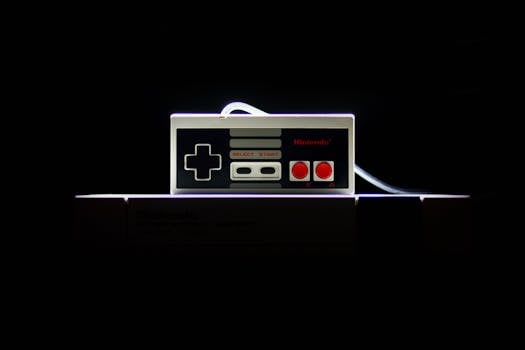 Photo: Tomasz Filipek / Pexels
 Photo: Yan Krukau / Pexels