How to Stream Games on Twitch: Your Ultimate Pro Guide
how to stream games on twitch

How to Stream Games on Twitch: Your Ultimate Pro Guide

Dive into the world of live game broadcasting and connect with a global audience, transforming your passion into an engaging community.

Start Your Stream Now

Key Takeaways

  • ✓ Twitch is the dominant platform for live game streaming, attracting millions of viewers daily.
  • ✓ A stable internet connection (at least 3-6 Mbps upload) is crucial for smooth streaming.
  • ✓ Dedicated streaming software like OBS Studio or Streamlabs Desktop is essential for managing your broadcast.
  • ✓ Consistent scheduling and community interaction are key to growing your Twitch channel.

How It Works

1
Prepare Your Hardware

Ensure you have a capable PC or console, a good microphone, and optionally a webcam. A stable internet connection is non-negotiable for a quality stream.

2
Choose & Set Up Software

Select a streaming application like OBS Studio or Streamlabs Desktop and configure it with your Twitch account. Optimize video and audio settings for your system.

3
Design Your Stream Layout

Add game capture, webcam, alerts, and overlays to create an engaging visual experience. Personalize your stream to reflect your brand.

4
Go Live & Engage

Start your broadcast and actively interact with your chat. Respond to comments, ask questions, and build a connection with your viewers to foster community.

Essential Gear for Twitch Streaming Success
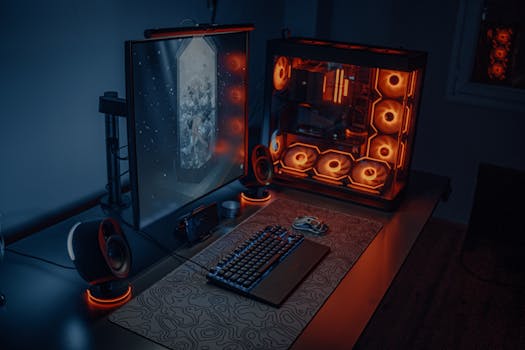
Sleek gaming desk setup featuring RGB lighting, large monitor, and gaming PC with glowing fans. Photo: Atahan Demir / Pexels
Embarking on your Twitch streaming journey requires more than just passion; it demands the right tools. Understanding the essential gear needed to stream games on Twitch is the foundational step toward a high-quality broadcast. First and foremost, a powerful gaming PC or a dedicated streaming PC is often necessary. While consoles like PlayStation and Xbox offer built-in streaming capabilities, a PC provides unparalleled flexibility and control over your stream's quality and visual elements. Look for a processor (CPU) like an Intel i5/Ryzen 5 or higher, and a graphics card (GPU) such as an NVIDIA GeForce GTX 10-series or AMD Radeon RX 500-series equivalent or better. These components handle game rendering, encoding, and various overlays without compromising performance. Beyond the core computer, your audio setup is paramount. Viewers are more forgiving of less-than-perfect video than they are of poor audio. Invest in a good quality microphone. Options range from budget-friendly USB microphones like the Blue Yeti or Razer Seiren Mini to professional XLR setups requiring an audio interface, such as the Shure SM7B with a Focusrite Scarlett. Position your microphone correctly to minimize background noise and capture your voice clearly. A pop filter is also highly recommended to reduce plosive sounds. Next, consider a webcam. While not strictly mandatory, showing your face helps viewers connect with you on a more personal level. Popular choices include the Logitech C920 series or the Razer Kiyo, which often includes a built-in ring light. Lighting is another often-overlooked aspect that significantly impacts your visual presentation. Natural light is ideal, but for consistent quality, consider a key light (like a ring light or softbox) and a fill light to eliminate harsh shadows. Your internet connection is perhaps the most critical component. A stable, high-speed connection with sufficient upload bandwidth is non-negotiable. For 1080p 60fps streaming, aim for at least 6-8 Mbps upload. You can check your internet speed using online tools. A wired Ethernet connection is always preferred over Wi-Fi to prevent drops and latency. Finally, comfortable headphones are crucial for monitoring your game audio and chat without feedback. Open-back headphones can offer a more natural soundstage, while closed-back options provide better sound isolation. Investing in these core pieces of equipment will set you up for a professional and enjoyable streaming experience, making it easier for you to engage your audience and build a thriving community.

Mastering Your Streaming Software: OBS Studio vs. Streamlabs Desktop
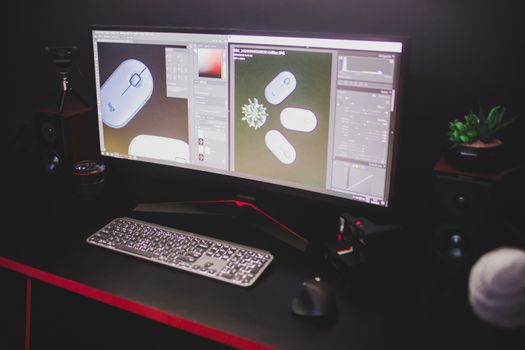
A sleek computer setup with dual monitors, keyboard, and mouse in a dark room. Photo: Matheus Bertelli / Pexels
Once your hardware is in place, the next vital step in learning how to stream games on Twitch is mastering your streaming software. The two dominant players in this arena are OBS Studio and Streamlabs Desktop (formerly Streamlabs OBS). Both are powerful, free, and open-source solutions, but they cater to slightly different user experiences. OBS Studio is the veteran, known for its robust performance, extensive customization options, and lightweight nature. It offers granular control over every aspect of your stream, from encoding settings to scene transitions. However, its interface can appear daunting to newcomers due to its sheer depth of features. Learning OBS Studio involves understanding concepts like sources, scenes, filters, and audio mixers. It's the preferred choice for streamers who want maximum control and efficiency, especially those with less powerful PCs, as it consumes fewer system resources. Streamlabs Desktop, on the other hand, is built on top of OBS Studio's core framework but features a much more user-friendly interface. It integrates many popular streaming tools directly into the application, such as alerts, overlays, chat widgets, and donation goals. This 'all-in-one' approach makes it incredibly appealing to beginners who want to get up and running quickly without fiddling with multiple browser sources or third-party applications. While Streamlabs Desktop offers convenience, it can be slightly more resource-intensive than vanilla OBS Studio. It also nudges users towards its premium features, Streamlabs Prime, which offers additional themes and tools. Regardless of your choice, the core setup process involves connecting your Twitch account within the software, adding your game as a 'Game Capture' or 'Window Capture' source, and integrating your webcam and microphone. You'll then configure your output settings, including resolution, framerate, and bitrate. For most streamers, 1080p at 60 frames per second (fps) is the target, but 720p 30fps is a perfectly acceptable starting point, especially if your internet speed or PC hardware is limited. Experiment with different encoding presets (e.g., NVENC for NVIDIA GPUs, AMF for AMD, or x264 for CPU encoding) to find the best balance between quality and performance. Both platforms allow you to create multiple 'scenes' – distinct layouts for different stream activities like 'Starting Soon,' 'Gameplay,' 'Be Right Back,' and 'Ending Stream' – which you can switch between seamlessly during your broadcast. Taking the time to understand your chosen software will significantly enhance your streaming quality and overall production value.

Building Your Community and Growing Your Twitch Channel
Smiling gamer standing with headphones in an illuminated gaming arena. Photo: RDNE Stock project / Pexels
Once you've mastered the technical aspects of how to stream games on Twitch, the real work of building an audience begins. Twitch is fundamentally a community platform, and growth is intrinsically linked to engagement. Consistency is king: establish a regular streaming schedule and stick to it. Viewers are more likely to return if they know when to find you online. Announce your schedule on social media and utilize Twitch's built-in schedule feature. Don't just play games; interact with your chat. Acknowledge new viewers, respond to questions, and initiate conversations. Treat your chat as a collaborative space, not just a comment section. Ask open-ended questions, encourage discussions about the game you're playing, or share personal anecdotes. Your personality is your biggest asset. Viewers are there to watch *you* as much as they are there to watch the game. Let your authentic self shine through. Networking is another crucial element. Connect with other streamers, especially those in a similar niche or with a comparable viewer count. Host or raid smaller streamers to introduce your audience to new content creators, and don't be afraid to collaborate. This cross-promotion can introduce your channel to new potential viewers. Leverage other social media platforms like Twitter, Instagram, TikTok, and YouTube to promote your streams, share highlights, and engage with your community off-stream. Short-form video content from your streams can be particularly effective on platforms like TikTok and YouTube Shorts. Consider creating highlight reels or full VODs (Video On Demand) for YouTube to capture viewers who prefer on-demand content and potentially direct them to your live streams. Offer incentives for engagement, such as channel point rewards, sub-only emotes, or even community game nights. Run polls, ask for game suggestions, and involve your audience in decisions where appropriate. Remember to cultivate a positive and welcoming environment. Set clear chat rules and enforce them with the help of moderators. A safe and inclusive space encourages viewers to stick around and participate. Finally, be patient. Growth on Twitch takes time and effort. Don't get discouraged by low viewer counts initially. Focus on improving your content, engaging your current audience, and consistently delivering quality streams. The community will follow. For more advanced tips on maximizing your reach, research Twitch analytics to understand your audience's behavior and tailor your content accordingly.

Common Pitfalls and Pro Tips for Aspiring Twitch Streamers

Smiling gamer standing with headphones in an illuminated gaming arena. Photo: RDNE Stock project / Pexels
Navigating the world of Twitch streaming can be challenging, and avoiding common pitfalls can significantly accelerate your progress. One of the biggest mistakes beginners make is neglecting audio quality. As mentioned, poor audio can drive viewers away faster than anything else. Always do a sound check before going live. Another pitfall is inconsistent scheduling. Viewers won't know when to tune in if your stream times are erratic. Treat your stream like a TV show with a set broadcast schedule. **Common Pitfalls to Avoid:** * **Ignoring Chat:** This is a live, interactive medium. Ignoring your viewers is a surefire way to lose them. * **Burnout:** Streaming is demanding. Set realistic goals, take breaks, and don't overschedule yourself. * **Technical Issues:** Frequent drops, poor framerates, or audio problems indicate a need to optimize your setup. * **Lack of Niche/Personality:** Without something unique, it's hard to stand out in a crowded market. * **Expecting Overnight Success:** Growth is a marathon, not a sprint. **Pro Tips for Success:** * **Optimize Your Settings:** Regularly review and adjust your streaming software settings for the best quality your hardware and internet can handle. Test different bitrates and encoders. * **Invest in Good Lighting:** Even a simple ring light can drastically improve your webcam's visual quality. * **Create Engaging Overlays:** While not essential for starting, custom overlays, alerts, and scenes add a professional touch and enhance viewer experience. * **Use a Stream Deck (or Software Equivalent):** A physical or virtual stream deck allows for quick scene switching, audio adjustments, and hotkey actions, making your stream feel smoother. * **Engage with Other Streamers:** Be a good community member. Watch other streams, participate in their chats, and network authentically. * **Utilize Twitch Extensions:** Explore extensions for things like polls, loyalty programs, or even mini-games to boost interaction. * **Review Your VODs:** Watch your past broadcasts to identify areas for improvement, whether it's your commentary, technical issues, or engagement. * **Promote Off-Platform:** Don't rely solely on Twitch discovery. Use YouTube, TikTok, Twitter, and Discord to attract new viewers. * **Have a Call to Action:** Encourage viewers to follow, subscribe, or join your Discord. Make it clear what you want them to do. * **Be Yourself:** Authenticity resonates more than trying to imitate popular streamers. Develop your unique style and voice.

Comparison

FeatureOBS StudioStreamlabs DesktopTwitch Studio
Ease of UseAdvancedBeginner-FriendlyVery Easy
Resource UsageLowModerate to HighLow to Moderate
CustomizationExtensiveGood (with Prime)Limited
Integrated AlertsVia Browser Source
Plugin SupportExtensiveLimited (built-in)None
CostFreeFree (Prime optional)Free
Live Chat OverlayVia Browser Source

What Readers Say

"This guide was a lifesaver! I was so overwhelmed trying to figure out how to stream games on Twitch, but the step-by-step breakdown made it incredibly easy to get my setup running smoothly. My audio has never sounded better."

Alex 'GameFlow' Chen · Seattle, WA

"The comparison of OBS Studio vs. Streamlabs Desktop helped me pick the right software for my PC. I love the pro tips section; it really gave me actionable strategies for growing my small community."

Maria 'PixelPanda' Rodriguez · Austin, TX

"Following this guide, I went from 0 to 25 average viewers in just two months! The advice on consistency and community engagement was spot on. My Twitch channel is finally gaining traction."

David 'LevelUpDave' Kim · Orlando, FL

"A very thorough guide for anyone looking to start. While some parts felt a bit advanced for a complete beginner, the overall structure and tips were immensely valuable. I appreciate the emphasis on audio."

Sarah 'StreamQueen' Johnson · Denver, CO

"Even as a console streamer, this guide provided fantastic insights into optimizing my setup and, more importantly, how to stream games on Twitch effectively. The networking tips are particularly useful for expanding my reach."

Chris 'ConsoleKing' Miller · Los Angeles, CA

Frequently Asked Questions

What's the minimum internet speed required to stream games on Twitch?

For basic 720p 30fps streaming, you'll need at least 3-5 Mbps upload speed. For a higher quality 1080p 60fps stream, aim for 6-8 Mbps or more. Always use a wired Ethernet connection for stability.

Do I need a powerful gaming PC to stream games on Twitch?

While a dedicated gaming PC provides the best experience, you can start streaming from most modern gaming consoles directly or with a capture card. For PC streaming, a decent mid-range CPU and GPU from the last few years should suffice, especially if you optimize your software settings.

How do I add alerts and overlays to my Twitch stream?

Most streaming software like OBS Studio and Streamlabs Desktop allow you to add alerts and overlays using 'Browser Source' elements. You'll typically generate a URL from a service like Streamlabs or StreamElements, then paste it into the browser source within your streaming software. Many templates are available online.

Is it expensive to start streaming on Twitch?

You can start streaming for free if you already own a gaming console or PC. Essential upgrades like a good microphone (starting around $50-$100) and a webcam (around $30-$70) are recommended. Software like OBS Studio is free. Costs can increase with professional gear, but it's not necessary to begin.

How does Twitch Studio compare to OBS Studio or Streamlabs Desktop?

Twitch Studio is Twitch's own streaming software, designed for maximum ease of use for beginners. It's very straightforward but offers less customization and fewer advanced features compared to OBS Studio or Streamlabs Desktop. It's a great starting point, but most streamers eventually transition to more powerful options as they grow.

Who should consider streaming games on Twitch?

Anyone with a passion for gaming who enjoys sharing their experiences and interacting with others should consider streaming on Twitch. It's ideal for those looking to build a community, showcase their skills, or simply share their love for games with a live audience.

Are there any risks associated with streaming personal information on Twitch?

Yes, always be mindful of what you share on stream. Avoid showing personal details like your address, phone number, or sensitive financial information. Be cautious with your webcam background to prevent revealing too much about your home. Use a VPN if you're concerned about your IP address being exposed.

What are the future trends in game streaming on Twitch?

Future trends include more interactive streaming experiences with viewer participation, increased use of AI-powered moderation and content creation tools, and continued growth in mobile streaming. Cross-platform content creation (e.g., Twitch for live, YouTube/TikTok for highlights) will also become even more crucial for growth.

Ready to turn your gaming passion into a live broadcast? This comprehensive guide has equipped you with everything you need to know how to stream games on Twitch effectively. Take the leap, set up your stream, and start building your community today!

Topics: how to stream games on twitchtwitch streaming setupbest streaming softwaregrow twitch channelgame streaming tips
Leo List
Brampton weed
Adultwork EstrelaBet Vai de Bet R7 Bet Betão Galera Bet Rainbet Bet9ja Shop SportyBet BetKing Sisal Loto Foot Hollywoodbets YesPlay Odibets RushBet Jugabet BetWarrior BetCity MSport betPawa Fortebet