What Is Cloud Gaming Service? Your Ultimate Guide
what is cloud gaming service

What Is Cloud Gaming Service? Your Ultimate Guide

Stream your favorite games instantly to any device, no powerful console or PC required. Gaming reimagined.

Start Gaming Now

Key Takeaways

  • ✓ Cloud gaming streams games from remote servers to your device, similar to Netflix for movies.
  • ✓ It eliminates the need for expensive gaming PCs or consoles, making high-end gaming accessible.
  • ✓ Requires a stable, high-speed internet connection for optimal performance.
  • ✓ Latency (input lag) is the primary technical challenge, though constantly improving.
  • ✓ Offers cross-device compatibility, allowing you to play on TVs, phones, tablets, and low-end computers.

How It Works

1
You Initiate a Game

When you select a game on a cloud gaming platform, your input (controller, keyboard, mouse) is sent over the internet to a powerful remote server. This server is equipped with high-end graphics cards and processors.

2
Server Processes & Renders

The remote server rapidly processes your inputs, runs the game, and renders the video frames in real-time. It's essentially playing the game for you in a data center far away.

3
Video Stream is Sent Back

These rendered video frames are then compressed and streamed back to your device over the internet. This happens almost instantaneously, creating the illusion that the game is running locally on your screen.

4
You Experience the Game

Your device receives and displays this video stream, allowing you to see and react to the game as if it were running directly on your hardware. This entire process occurs in milliseconds, aiming for a seamless gaming experience.

Understanding the Core Concept of Cloud Gaming Explained
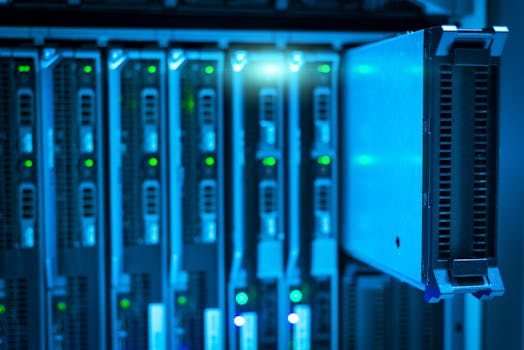
Detailed view of a server rack with a focus on technology and data storage. Photo: panumas nikhomkhai / Pexels
At its heart, understanding what is cloud gaming service means grasping a fundamental shift in how we consume interactive entertainment. Imagine streaming a high-definition movie from Netflix or Hulu. You don't download the entire movie, nor do you need a super-powerful home theater PC to decode it. Instead, the video is processed and delivered to your screen in real-time by a remote server. Cloud gaming operates on precisely the same principle, but with a critical interactive layer. Instead of pre-recorded video, cloud gaming services stream live, interactive video feeds of games. When you press a button on your controller, that input signal travels over the internet to a distant data center. In that data center, a powerful server, often equipped with top-tier GPUs and CPUs, executes your command within the game. It then renders the resulting video frames of the game world and streams them back to your device, all in a matter of milliseconds. This continuous loop of input, processing, and video streaming creates the illusion that the game is running natively on your local hardware. This technology effectively decouples the game's execution from your local hardware. You're no longer limited by the processing power of your own computer, console, or mobile device. As long as your device can decode a video stream and send inputs, you can access and play graphically intensive, cutting-edge games. This paradigm shift democratizes access to high-fidelity gaming, removing the significant financial barrier of purchasing expensive gaming rigs or consoles. It also eliminates the need for large game downloads, lengthy installations, and constant updates, streamlining the gaming experience significantly. Whether you're on a Chromebook, an older laptop, a smart TV, or a smartphone, the potential to play the latest AAA titles becomes a reality, provided you have a robust internet connection. This accessibility is a game-changer for many aspiring gamers and a massive convenience for existing ones. For more insights into the broader landscape of digital entertainment, explore articles on the evolution of gaming platforms.

The Technology Behind Game Streaming: How It Works Seamlessly

Delving deeper into what is cloud gaming service reveals a complex interplay of advanced technologies working in harmony to deliver a smooth experience. The journey begins with your input. When you press a button, move a joystick, or click your mouse, that signal is digitized and sent over your internet connection to the cloud gaming server. This server, often located in a massive data center, is essentially a high-performance gaming PC in the sky. It receives your input, executes the command within the game, and then renders the next frame of the game world. This rendering process is computationally intensive, requiring state-of-the-art graphics cards and processors to generate stunning visuals at high frame rates. Once the frame is rendered, it undergoes rapid video encoding. This is a crucial step where the raw video data is compressed into a smaller, more manageable stream that can be efficiently transmitted over the internet. Algorithms like H.264 or newer, more efficient ones like H.265 (HEVC) or AV1 are employed to achieve high visual quality at lower bandwidths. The encoded video stream is then sent back to your device. Upon arrival, your device's hardware or software decoder quickly decompresses the video, and it's displayed on your screen. The entire round trip – input, processing, rendering, encoding, transmission, decoding, and display – needs to happen in mere milliseconds to avoid noticeable lag, often referred to as latency. Minimizing latency is the paramount challenge for cloud gaming providers. Every millisecond counts. This is why geographical proximity to data centers plays a significant role; the shorter the physical distance, the less time it takes for data to travel. Furthermore, robust network infrastructure, including fiber optics and efficient routing protocols, is essential. Providers also utilize adaptive bitrate streaming, which dynamically adjusts the stream quality based on your internet connection's fluctuating bandwidth, ensuring a continuous experience even if quality momentarily dips. Advanced network optimization techniques, predictive algorithms, and even specialized hardware contribute to reducing lag, making the experience feel as close to local play as possible. This intricate dance of hardware, software, and networking is what allows you to play graphically demanding games on virtually any internet-connected device.

Advantages and Disadvantages of Cloud Gaming Services

Understanding what is cloud gaming service also requires a balanced look at its pros and cons. The advantages are compelling and often cited as the primary drivers for its adoption. First and foremost is accessibility. You no longer need to spend hundreds or thousands of dollars on a high-end gaming PC or a dedicated console. A basic laptop, a smartphone, a smart TV, or even a streaming stick with a decent internet connection is often all you need. This dramatically lowers the barrier to entry for playing the latest and greatest games. Secondly, convenience is a huge factor. Say goodbye to lengthy downloads, installation times, and constant updates. Games are ready to play instantly, often with just a click. This also frees up valuable storage space on your local devices. Furthermore, cloud gaming offers cross-device play; you can start a game on your PC, pick it up on your tablet during your commute, and finish it on your smart TV later, seamlessly switching between devices. However, cloud gaming is not without its drawbacks. The most significant is reliance on a stable, high-speed internet connection. Fluctuations in bandwidth, high ping, or network congestion can lead to noticeable lag (input delay), pixelation, or even disconnections, severely impacting the gaming experience. For competitive online games, even minor latency can be a deal-breaker. Data usage can also be substantial, especially when streaming at high resolutions and frame rates, which could be a concern for those with data caps. While the initial hardware cost is eliminated, you typically pay a subscription fee, and sometimes still need to purchase individual games, which can add up over time. The game libraries offered by different services vary, meaning you might not always find every title you want. Additionally, you don't 'own' the game in the traditional sense; your access is tied to the service, and if the service goes down or a game is removed, you lose access. Despite these challenges, the technology continues to evolve rapidly, with providers constantly working to mitigate these issues and enhance the user experience. For more on how this technology impacts broader entertainment, see our piece on the future of interactive entertainment.

Choosing the Right Cloud Gaming Platform: Tips and Considerations

Navigating the landscape of cloud gaming services can be daunting, but choosing the right platform is key to a satisfying experience. When considering what is cloud gaming service best for you, several factors come into play. * **Internet Connection Requirements:** This is paramount. Most services recommend a minimum of 15-25 Mbps for 1080p streaming and 35-50 Mbps for 4K. Test your internet speed and stability before committing. A wired Ethernet connection is almost always superior to Wi-Fi for minimizing latency. * **Game Library and Availability:** Does the service offer the games you want to play? Some platforms include a library of games with the subscription, while others require you to purchase games separately (though you can then play them through the cloud). Check for exclusive titles or popular genres you enjoy. * **Subscription Model and Pricing:** Compare monthly costs, annual discounts, and whether game purchases are extra. Some services offer free tiers with limited play time or lower quality, which can be a good way to test the waters. * **Device Compatibility:** Ensure the service supports the devices you intend to use – be it a PC, Mac, Android phone/tablet, iPhone/iPad, smart TV, or streaming stick. Check for specific operating system versions or browser requirements. * **Resolution and Frame Rate:** Do you prioritize 1080p at 60fps, or is 4K resolution a must-have? Some services offer higher tiers for better visual fidelity and smoother gameplay, often at a higher price point. * **Latency and Regional Servers:** While difficult to test beforehand, look for services with data centers geographically closer to your location to minimize ping. User reviews from your region can be helpful here. * **Controller Support:** Most services support standard USB or Bluetooth controllers. Verify compatibility with your preferred gamepad. By carefully evaluating these points, you can select a cloud gaming service that aligns with your internet capabilities, gaming preferences, and budget, ensuring you get the most out of this revolutionary technology.

Comparison

FeatureNVIDIA GeForce NOWXbox Cloud Gaming (Game Pass Ultimate)Amazon Luna
Business ModelBring Your Own Games (PC library)Subscription (included games)Subscription (channels)
Game LibraryIntegrates with Steam, Epic, etc.Game Pass libraryChannel-based library
Resolution/FPSUp to 4K/120fps (Ultimate)Up to 1080p/60fpsUp to 1080p/60fps
Device SupportPC, Mac, Android, iOS, TVPC, Android, iOS, Xbox, TVPC, Mac, Android, iOS, Fire TV
Internet Speed Rec.15-35Mbps+20Mbps+10-35Mbps+

What Readers Say

"I was skeptical about what is cloud gaming service, but GeForce NOW changed everything. I can play Cyberpunk 2077 on my old MacBook Pro with incredible graphics. It's truly a game-changer for someone who can't afford a new gaming PC."

Alex P. · Seattle, WA

"Xbox Cloud Gaming with Game Pass Ultimate is fantastic for trying new games. I've discovered so many titles I wouldn't have bought otherwise, all without any downloads. The convenience is unmatched."

Maria S. · Austin, TX

"My family uses Amazon Luna on our Fire TV stick, and it's perfect for casual gaming nights. No need for a console, just pick up a controller and play. The kids love the variety of games available through the channels."

Ben T. · Orlando, FL

"Cloud gaming has been mostly excellent, though my internet connection can sometimes be a bottleneck. When it's stable, the experience is indistinguishable from local play. It's a great solution for portable gaming."

Chloe L. · Denver, CO

"As a busy professional, I don't have time for downloads. Understanding what is cloud gaming service meant I could jump straight into games during my lunch break on my tablet. It's efficient, fun, and surprisingly responsive."

David R. · New York, NY

Frequently Asked Questions

What is the primary benefit of using a cloud gaming service?

The primary benefit is accessibility to high-end gaming without needing expensive local hardware. You can play graphically demanding games on virtually any internet-connected device, from smart TVs to smartphones, eliminating the cost of consoles or powerful gaming PCs.

Will I experience lag or latency with cloud gaming?

While cloud gaming aims for minimal latency, some degree of lag is inherent due to the nature of streaming over the internet. A stable, high-speed internet connection and proximity to the service's data centers are crucial for reducing noticeable input delay and ensuring a smooth experience. Providers continuously optimize their networks to combat this.

How do I get started with a cloud gaming service?

To get started, you typically need to choose a service (e.g., GeForce NOW, Xbox Cloud Gaming), subscribe to their plan, and then download their app or access their service via a web browser on your compatible device. You'll also need a stable internet connection and a compatible controller (or keyboard/mouse).

Is cloud gaming more expensive than traditional gaming?

The cost varies. While you save on initial hardware purchases (console/PC), you pay a recurring subscription fee for the cloud service. Some services also require you to purchase games separately. Over time, the total cost can be comparable or even higher than owning a console, but it offers flexibility and avoids large upfront investments.

How does cloud gaming compare to downloading games locally?

Cloud gaming streams games, eliminating downloads, installations, and hardware requirements, offering instant play on any device. Locally downloaded games run directly on your hardware, providing the lowest possible latency and maximum graphical control, but demand powerful (and expensive) equipment and significant storage space.

Who should consider using a cloud gaming service?

Cloud gaming is ideal for casual gamers, those on a budget who can't afford high-end hardware, individuals with limited storage space, or gamers who want the flexibility to play on multiple devices (phones, tablets, smart TVs) without having to carry their console or PC around.

Are my game saves secure with cloud gaming services?

Yes, most reputable cloud gaming services automatically save your game progress to the cloud, just like many modern game launchers do. This means your saves are generally secure and accessible across different devices as long as you're logged into your account on that service.

What is the future outlook for cloud gaming?

The future of cloud gaming looks promising. As internet infrastructure improves globally (especially with 5G and fiber optics) and streaming technologies become more efficient, latency will continue to decrease. Expect more diverse game libraries, higher resolutions, and integration into everyday devices, making it an increasingly dominant force in the gaming industry.

Now that you have a comprehensive understanding of what is cloud gaming service, it's time to experience the future of gaming for yourself. Explore the various platforms, find the one that fits your needs, and dive into a world of instant, high-fidelity gaming without the hardware hassle. Your next adventure awaits, just a stream away!

Topics: what is cloud gaming servicecloud gaming explainedgame streaminggaming without downloadsfuture of gaming
Leo List
Brampton weed
Adultwork EstrelaBet Vai de Bet R7 Bet Betão Galera Bet Rainbet Bet9ja Shop SportyBet BetKing Sisal Loto Foot Hollywoodbets YesPlay Odibets RushBet Jugabet BetWarrior BetCity MSport betPawa Fortebet